Sockets
More than 6,000 charging sockets had to move without a driver noticing. Dual-running the old and new backends, then cutting over in phases, was the only acceptable risk.
We moved the network off Ampeco onto a system we built internally. Drivers kept charging. Partners stayed connected. The licence bill dropped by more than £200,000 a year.
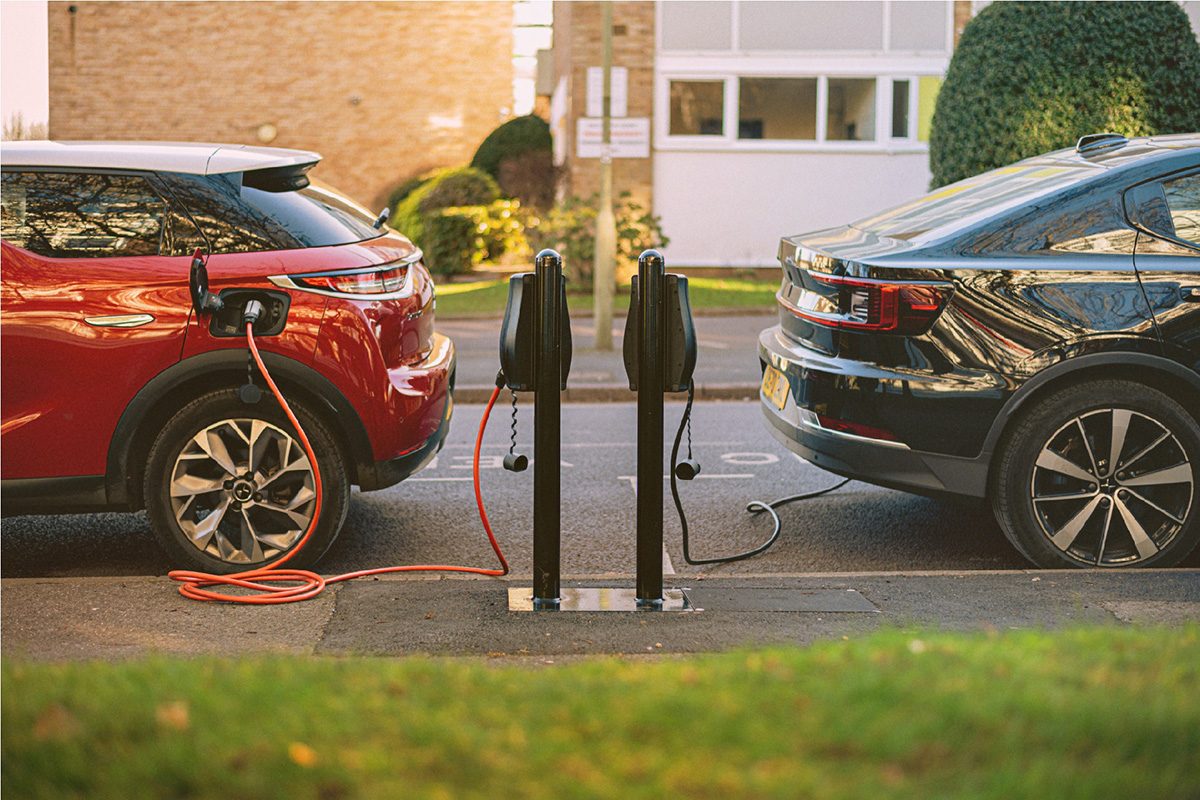
Connected Kerb is a UK charge point operator: on-street sockets, a driver app, and a web of roaming partners. When I was Head of Digital Products, the network was running on a licensed CPMS (Ampeco) plus a licensed consumer app. Both were getting expensive, and neither gave us the control we needed to ship at the pace of the network.
The job was not "pick a vendor." It was a build vs buy call on two products at once: the mobile app, and the CPMS that talks to every socket.
We chose to build both internally. I led that project: the discovery, the decision, the delivery plan, and the migration itself. Solidstudio were the engineering partner on the CPMS side. I sat on the Connected Kerb side as product lead, with Ben Boutcher-West (CTO) and Santiago Barbat (lead engineer).
More than 6,000 charging sockets had to move without a driver noticing. Dual-running the old and new backends, then cutting over in phases, was the only acceptable risk.
Existing app users and the eMSP stack could not be reset. Accounts, sessions, and billing had to land on the new system as-is.
OCPI partners already connected to the network needed compatibility tests before we flipped each cohort of sockets.
The backend moved from AWS to Azure to match Connected Kerb's infrastructure. Charge points had to stay OCPP-compliant with the hardware already in the street.
We did not cut the whole estate on a Friday night. May 2024: two charge points, on purpose, to prove the path. Then more. By October 2024 we were at roughly half the network, still with live monitoring and a way back if a cohort misbehaved. Then the rest.
That sequencing is the whole job. A CPMS migration fails in operations, not in a demo. You need a proxy that can talk to both backends, a rollback, and someone who will sit with the on-call until the graph is boring.
Result: the sockets moved. Zero downtime for drivers. Faster feature work because we owned the software. Licence savings of more than £200,000 a year.
We recorded a session at Connected Kerb's London office after the work. I spoke as product lead, alongside the CTO and lead engineer. It is the closest public record of how the migration was run.
Partner write-up from Solidstudio's side: Empowering EV charging through platform migration.